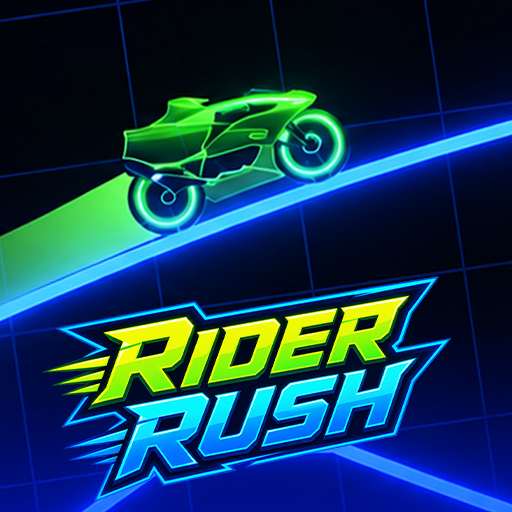
Rider Rush
Rider Rush Mods Game
Sprunki Phase 9 Ggtp
Rooster Road
Please Do Not Feed The Sprunki Brud
Endacopia

Basketball Hit
Flying Car Game Police Games
My Talking Tom Cat But With Oren
Park Fever

Goalheads Io
Flip Or Fail
Classic Sudoku Puzzle
Skillful Finger
Tomb Of The Mask Neon
Boboiboy Galaxy Run

Sprunki Footlongs Sandbox
Hamster Maze
Blobade
Flip Duel
Wheely 2
Obby Tower

How To Play Rider Rush
The core gameplay of Rider Rush is built around three fundamental mechanics: velocity control, mid-air maneuvering, and hue synchronization. Achieving success requires players to combine these components fluidly and without hesitation.
To begin with, managing your velocity is of utmost importance. The luminous pathways are filled with loops, bends, openings, and steep drops, all of which demand forward momentum. Riders must apply throttle to generate sufficient speed to clear these obstacles and maintain forward progress. Yet, keeping the accelerator pressed indefinitely is a considerable risk. An excessive rate of speed reduces handling precision, especially as you approach stretches where the track's color shifts. The optimal strategy is to use acceleration intentionally and release it at the right moments to preserve steadiness.
Furthermore, control while airborne is a vital ability. Whenever the bike becomes airborne after leaving the track surface, riders are able to utilize rotation commands to execute front flips, back flips, or simply change the angle of descent. These actions are helpful for positioning the motorcycle correctly in relation to the landing area. Nevertheless, aerial tricks should only be performed when circumstances permit. Spinning without a clear objective frequently results in poor landings and violent crashes. The rider's primary goal must always be a secure touchdown with both tires contacting the surface firmly.
Another essential element is color synchronization, which stands as a distinctive and unavoidable rule. The route ahead will frequently be tinted with specific colors, and the rider's bike must be switched to a matching hue prior to traversing that portion of the track. This mechanic demands rapid reflexes and exact timing, particularly when traveling at high velocities or when alternating colored panels appear in quick succession. A failure to align the bike's color with the track leads to an instant wipeout. Consequently, players need to continuously monitor the upcoming pathway and change colors precisely when required.
Finally, mastery is achieved through persistent repetition. More advanced stages present complex route designs that require sharp reflexes and exact execution. It is common for players to encounter the same barrier repeatedly. This should be viewed as an essential stage of development. Through dedicated practice, riders can synchronize their throttle usage, airborne rotations, and color transitions with greater ease. Eventually, even the most demanding neon circuits can be overcome with consistency and skill.
Rider Rush Wiki
Rider Rush: A Precision Neon Motorbike Adventure
Overview
Rider Rush is a rapid-fire 2D motorbike platformer available online, placing you in command of a streamlined vehicle as you navigate twisting, color-altering neon circuits. The primary goal is straightforward: get to the finish line. Yet the route is far from easy. The tracks are packed with vertical loops, sharp bends, chasms, steep inclines, and unexpected obstacles. Success hinges on exact driving, thoughtful throttle control, and a sharp eye for the game's shifting-color system. Every leap, touchdown, and hue transition must be perfectly timed. One small error can instantly terminate your run. The experience favors those who can merge velocity with precision and who can anticipate the course ahead. With rising difficulty levels and a broad selection of progressively challenging layouts, Rider Rush delivers a demanding adventure for fans of skill-driven arcade racing and platforming.
Core Attributes
Rider Rush distinguishes itself through its fusion of high-velocity action and exacting gameplay mechanics. Its defining attributes include:
- Quick-Paced 2D Motorcycle Action: The title centers on rapid reflexes and fluid handling. You guide a stylish motorcycle through a horizontally scrolling landscape, where hesitation is not an option.
- Color-Shifting Glowing Routes: The courses feature vivid, luminous surfaces that undergo color changes. This visual effect is not merely decorative; it forms a crucial gameplay component. Your bike must adopt the same color as the track to avoid destruction.
- Varied Track Obstacles: Loops, bends, openings, and tilted gradients appear frequently. These features require careful buildup and regulation of speed. The stage design maintains engagement by continually introducing fresh hurdles.
- Airborne Trick Mechanics: While in flight, you have the ability to spin the motorcycle to execute flips or fine-tune your descent angle. This introduces an extra layer of expertise and showmanship, albeit with associated danger. Pulling off tricky moves feels rewarding, but caution should always take precedence.
- Gradual Difficulty Curve: The game begins with simple courses and slowly introduces more intricate arrangements. This ensures a progressive learning curve that tests your coordination and exactness as you advance.
- Immediate Failure and High Consequences: A single misstep can wipe out your entire run. This fosters a tense, high-pressure environment that appeals to gamers who relish challenging arcade experiences. It also promotes mastery through repeated attempts.
- Instant Online Play: As a web-based title, Rider Rush is accessible directly in your browser, allowing for immediate entry into the action. This ease of access works well for short gaming breaks or longer practice sessions.
Safety Advice & Pointers
Achieving success in Rider Rush demands more than just swift reflexes. Tactical thinking and careful judgment are equally vital. The following recommendations can assist you in boosting your gameplay and steering clear of frequent errors.
- Avoid Excessive Throttle: Although speed is necessary for conquering loops and wide gaps, an overabundance of velocity can render the bike hard to manage. Practice adjusting the accelerator. Ease off when approaching tight turns, color shifts, or sections where exactness outweighs momentum.
- Emphasize Safe Touchdowns: Performing flips and acrobatic moves in the air is appealing but hazardous. Engage in stunts only when you are certain of sufficient airtime and a safe landing spot. When uncertain, utilize rotation controls simply to straighten the bike relative to the road. A tidy landing is consistently preferable to a spectacular wreck.
- Spot Color Alterations Promptly: The color-matching mechanism demands foresight. Continuously survey the upcoming track's hue. If you detect an incoming change, adjust your bike's color as soon as possible. Delaying until the final instant can result in errors, particularly at elevated speeds.
- Maintain Composure on Tough Stretches: Some courses may appear insurmountable initially. Do not allow frustration to dominate. Repeated failures constitute part of the learning journey. Pause to examine the track's structure, identify the danger zones, and then retry with a more refined approach.
- Weigh Dangers Against Incentives: Stunts might deliver a sense of accomplishment, but they are not obligatory for advancement. Concentrate on finishing the course safely. Attempt advanced techniques only after you have solidified the fundamentals and are thoroughly acquainted with the route.
- Engage in Regular Training: The game relies heavily on muscle memory. The more frequently you play, the more adept you become at coordinating acceleration, spin, and color shifts. If a specific level causes trouble, keep practicing. Your abilities will sharpen, and the course will eventually become easier to handle.
- Beware of Adjacent Color Zones: Certain segments feature distinct colors placed in close proximity. These areas are especially perilous. Reduce speed if needed and switch colors with exactness. Sacrificing a bit of momentum is far better than crashing and being forced to restart.
In closing, Rider Rush is a rigorous yet gratifying game that evaluates your precision, quick thinking, and strategic foresight. By achieving mastery over throttle regulation, airborne adjustments, and color coordination, you can traverse its hazardous neon courses and savor the excitement of overcoming ever-harder trials. Whether you're a casual participant seeking a brief challenge or a committed enthusiast hunting for a tough, accuracy-based game, Rider Rush provides an absorbing experience that honors both dedication and deftness.
Rider Rush Frequently Asked Questions
Q: What exactly is Rider Rush?
A: Rider Rush is a rapid-fire 2D motorbike platformer playable online. Players guide their motorcycle through twisting, color-changing neon circuits that present constant dangers, and they must successfully reach the endpoint to complete the stage.
Q: What is the primary goal in Rider Rush?
A: The central target in Rider Rush is to overcome all jumps, loops, slopes, and unexpected obstacles, then cross the finish line without overturning, crashing, or committing any other mistake that would abruptly terminate the attempt.
Q: Why is precision so critical in Rider Rush?
A: In Rider Rush, there is barely any margin for error. You must carefully manage the bike's speed and momentum, time color transitions perfectly, perform aerial stunts, and work through progressively more difficult neon tracks. A tiny slip can immediately ruin the run.
Q: What is the best way to deal with loops, curves, gaps, and steep slopes?
A: To handle loops, curves, gaps, and steep sections, build enough momentum by accelerating, but avoid holding the throttle for too long. Excessive speed undermines control, especially in areas that combine multiple color surfaces.
Q: How do rotation controls function when you are in the air in Rider Rush?
A: While airborne, you can utilize rotation controls to execute frontflips or backflips, or to fine-tune the angle of your touchdown. Instead of spinning solely to perform tricks, focus on making a safe landing with both wheels positioned properly on the track.
Q: Why is it necessary to align colors in Rider Rush?
A: The path ahead periodically changes hue, and your bike's color has to match the surface you are currently riding across. Swift, precise responses are essential, particularly when traveling at high velocity or when sections of different colors are packed tightly together.
Q: What occurs if you crash or overturn in Rider Rush?
A: Crashing, overturning, or making any other mistake in Rider Rush will immediately bring your run to an end, leaving no opportunity to continue from the same point.