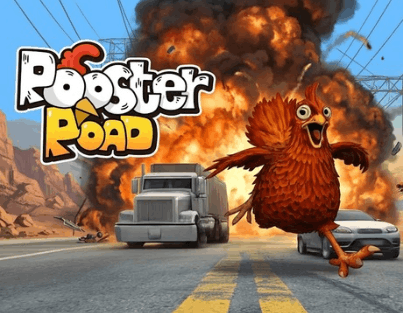
Rooster Road
Rooster Road Mods del Juego
Por favor no alimentes al Sprunki Brud
Endacopia

Basketball Hit
Juegos de Coches Voladores de Policía

My Talking Tom Cat But With Oren
Park Fever

Goalheads Io

Flip Or Fail
Sudoku Clásico

Skillful Finger
Tomb Of The Mask Neon

Vex 9

Shadowman Runner

Poople

Wheely 2

Tomb Runner

Lazy Bear
Hamster Maze

Sprunki Footlongs Sandbox
Sprunki Shifted Phase 3 Boxduds Take








Cómo Jugar Rooster Road
Rooster Road emplea mecánicas de control simples que son rápidas de aprender pero difíciles de dominar. Los jugadores pueden mover al gallo en direcciones hacia adelante y hacia atrás a lo largo del camino. Este movimiento bidireccional sirve como la mecánica fundamental del juego. La carretera en sí nunca está estacionaria; el tráfico puede acercarse desde la izquierda, la derecha o varios otros ángulos, mientras que las áreas abiertas entre vehículos permanecen en un estado de cambio continuo. Como resultado, uno debe monitorear cuidadosamente el movimiento del tráfico, detectar una abertura adecuada y avanzar cuando el momento sea favorable. Reconocer el momento adecuado para retroceder es igualmente crítico. Cuando un vehículo que se aproxima llega más rápido de lo anticipado, retroceder a un punto anterior puede evitar un accidente.
Los tramos iniciales de la carretera ofrecen una experiencia bastante indulgente, permitiendo a los jugadores familiarizarse con el ritmo del juego. Una vez que el gallo avanza más, la cantidad de tráfico aumenta y el comportamiento de conducción de los vehículos se vuelve cada vez más impredecible. Además, aparecen potenciadores que otorgan beneficios a corto plazo. Aun así, tales bonificaciones tienden a aparecer en zonas peligrosas. El jugador se ve entonces forzado a sopesar la ventaja potencial contra el riesgo asociado. Al final, el objetivo principal es llevar al gallo lo más lejos posible por la carretera. Aunque cada intento termina rápidamente, las lecciones aprendidas de cada error sientan las bases para un siguiente intento más exitoso.
Rooster Road Wiki
Summary
At first glance, Rooster Road appears to be a simple arcade title built around the timeless "why did the chicken cross the road" idea. In practice, it evolves into a nerve-wracking reflex challenge with considerable stakes. Players take command of a rooster whose goal is to navigate a series of busy thoroughfares filled with cars, trucks, and other vehicles that move at different speeds and approach from multiple angles. Unlike conventional endless runners, where moving forward happens automatically, Rooster Road calls for a far more thoughtful strategy: each step must be carefully timed, every opening must be assessed, and any choice you make can either save you or send you back to the start. The game's charm stems from its uncomplicated design—no need to master complex systems or sit through extended tutorials. Instead, you have a rooster, a road, and an endless stream of traffic. However, this apparent simplicity conceals a remarkably nuanced gameplay experience. Players must decide when to press ahead and when to hang back, when to seize an opportunity and when to let it pass, and when to rely on raw speed rather than patient waiting. As a result, the game welcomes beginners instantly while still offering a meaningful challenge to veterans. Thanks to its quick sessions and progressively tougher conditions, Rooster Road creates an addictive "just one more attempt" mindset that draws players back to the asphalt again and again.
Key Features
Rooster Road sets itself apart through a number of intentional design elements that appeal to enthusiasts of arcade and reaction-based gaming:
- Unpredictable, constantly shifting traffic: Vehicles arrive from various directions, and safe spots are never guaranteed to stay safe. This keeps every session lively and demands continuous attention from the player.
- Strategic forward and backward movement: Unlike many endless runners, Rooster Road allows you to move in both directions. This gives you the freedom to carve out safe paths and retreat when circumstances become too dangerous.
- Steady difficulty progression: Early roads are relatively calm and serve as a gentle learning curve. As you advance, the challenge intensifies with quicker vehicles and narrower openings. This gradual escalation guarantees that players never run out of obstacles to overcome.
- Power-ups with risk-reward trade-offs: Boosts can provide useful benefits, but they tend to be placed in dangerous zones. This creates an ongoing dilemma: chase the bonus or prioritize staying alive.
- High replay value: Since an individual run can end in seconds, the game naturally pushes players to hit retry. The urge to beat your previous best distance serves as a strong incentive, and the mechanics encourage repeated practice and careful observation.
- Clean, no-frills presentation: The visuals and narrative take a backseat to pure gameplay. By stripping away distractions, the game becomes a concentrated evaluation of reflexes and judgment.
Precautions/Tips
Although picking up Rooster Road is easy, reaching impressive distances requires a certain amount of self-control and strategic thinking. The following advice and warnings can help you survive longer and steer clear of frequent errors.
- Avoid rushing. The biggest mistake players make is constantly pushing forward. Instead, hold your position until a safe opening appears, then advance with purpose.
- Survey the entire road. Do not focus solely on the nearest vehicle. Take note of the broader movement patterns so you can anticipate changes and plan your route ahead of time.
- Make use of backward steps. Retreating is not a sign of cowardice; it is a calculated move that can pull the rooster out of harm's way.
- Skip unnecessary power-ups. If collecting a bonus would force you into heavy traffic, leave it behind. Your safety outweighs a brief advantage.
- Remain calm in stressful moments. As the traffic grows more chaotic, panic is your enemy. Breathe deeply and concentrate on the next viable gap.
- Analyze every accident. After you crash, take a moment to review what led to the failure. Did you underestimate a vehicle's velocity? Did you act too soon? Apply those lessons to your next run.
- Develop reflexes gradually. Your ability to read traffic and time movements will improve through consistent practice. The more time you spend with the game, the sharper your instincts will become.
- Set manageable goals. Rather than attempting to clear the entire stretch of road in one bold push, aim to advance one safe gap at a time. This approach lowers stress and leads to smarter decisions.
In the end, Rooster Road is a game that honors patience and careful observation. Those who treat the traffic with respect and fight the urge to take reckless chances will discover a challenging, deeply gratifying experience that keeps drawing them back to the roadside.
Rooster Road Preguntas Frecuentes
P: ¿Qué es exactamente Rooster Road?
R: Rooster Road es un divertido juego de arcade en el que los jugadores guían a un pequeño pollo a través de carreteras bulliciosas llenas de coches, camiones y otro tráfico que pasa a toda velocidad.
P: ¿Qué objetivo debe cumplir el jugador en Rooster Road?
R: El objetivo principal es mover al pollo de forma segura al lado opuesto de la carretera.
P: ¿Cómo se comporta la carretera en Rooster Road?
R: La vía está en constante movimiento, con vehículos que vienen de múltiples direcciones. Las áreas que parecen seguras pueden desaparecer en un instante.
P: ¿Qué estrategia debe usar un jugador para moverse con seguridad?
R: En lugar de correr sin parar, escanea el camino por delante y espera la oportunidad ideal para avanzar. A veces, retroceder un paso es la decisión más sabia para evitar el peligro.
P: ¿Cómo cambia la dificultad a medida que avanza el juego?
R: A medida que avanzas, esquivar se vuelve más desafiante, y el tráfico constante sigue generando situaciones sorprendentes.
P: ¿Qué son los potenciadores en Rooster Road, y cuál es el riesgo asociado con ellos?
R: Los potenciadores, también conocidos como recompensas, otorgan beneficios útiles y añaden diversión extra al viaje. Sin embargo, perseguirlos puede ser peligroso cuando hay muchos vehículos en tu camino.
P: ¿Cuál es la clave para sobrevivir más tiempo en Rooster Road?
R: La paciencia es esencial. Evita avanzar a ciegas; en su lugar, estudia los patrones de movimiento del tráfico, aprovecha cada espacio seguro y prepárate para dar marcha atrás cuando sea necesario.
P: ¿Por qué el juego es atractivo para los jugadores?
R: El encanto del juego proviene de ese impulso persistente de "otro intento más". Una sola partida puede terminar en un instante, lo que empuja al jugador a intentarlo de nuevo y superar su mejor marca anterior.
P: ¿Qué debe hacer el jugador después de un fallo?
R: Cada vez que falles, recuerda exactamente dónde te equivocaste y usa ese conocimiento para mejorar en tu siguiente intento.
P: ¿La habilidad del jugador mejora con el tiempo?
R: Absolutamente. A medida que se agudizan tus reflejos, incluso rutas que antes parecían caóticas se vuelven mucho más manejables.
P: ¿Qué juego similar se menciona en la descripción?
R: La descripción se refiere a Cuby Road como un juego comparable.
P: ¿Cuáles son las características de Cuby Road?
R: Cuby Road presenta acción arcade sencilla pero exigente, enfatizando el control preciso, la evasión de obstáculos y los reflejos rápidos. Aunque es fácil de aprender, alcanzar una puntuación alta es bastante difícil.